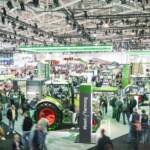

Inhouse Farming – Feed & Food Show” – New DLG platform for agricultural and food systems of the future – From 12 to 18 November 2023 in Hanover at Agritechnica.
What contribution can the so-called “New Food Systems” make to the protein supply of the future and which process technology solutions have already reached practical maturity? Answers to this question will be provided by the “Inhouse Farming – Feed & Food Show”, which will be held in Hanover from 12 to 18 November at the same time as Agritechnica, the world’s leading trade fair for agricultural machinery. The focus of the B2B platform organised by the DLG (German Agricultural Society) is on technologies with which alternative proteins can be obtained from plants, insects, fungi and algae.
With the continuing population growth, the global demand for animal proteins will double by 2050, according to estimates by the Food and Agriculture Organisation (FAO) of the United Nations. New protein sources are therefore one of the major topics at the “Inhouse Farming – Feed & Food Show”. The DLG’s new platform offers participants a look at what’s happening in the market and the developments of plant-based, fermented and cultivated proteins for the food industry. Whether it’s fermenters, bioreactors, filtration systems or dryers: Companies will find comprehensive information on the production of alternative proteins at the event in Hanover.
Driving force behind cellular agriculture
“The technologies developed in recent years have the potential to enable cellular agriculture on an economic scale. The solutions presented at the “Inhouse Farming – Feed & Food Show” have an impact on the entire value chain and optimise the production of alternative proteins for the feed and food industry,” emphasises Carola K. Herbst, Deputy Managing Di- rector of the DLG Competence Center Food. Start-ups play an important role here. They drive innovation, but are often still stuck on a laboratory scale – and with their own unique process requirements. “Scaling these processes to an industrial level poses major chal- lenges, as it requires a consistent supply of raw materials, streamlining production processes and building a distribution network,” says Carola Herbst.
The GEA New Food Application and Technology Center of Excellence (ATC) in Hildesheim, Germany, aims to close the gap between research and industry. It houses a pilot plant for the production of sustainable alternatives to meat, milk, seafood and eggs through micro-organ- isms and cell cultivation. The goal is to prepare customers on site for the necessary pro- cesses and products for commercial production – a task that the “Inhouse Farming – Feed & Food Show” has also committed itself to.
The task of the B2B meeting point is therefore to bring together the players from the fields of in-house farming and controlled environment agriculture in Hanover and to support them in expanding their networks.
Recently, more and more established companies in Europe and Germany have recognised the economic potential of start-ups and have increasingly in- vested in plant proteins as well as cultivatable proteins. Carola K. Herbst says, “The use of high-quality by-products and the associated return of valuable nutrients to the food industry are integral components of new protein strategies.” One example is the cooperation between the Bitburger Brewery Group and the Hamburg-based start-up Mushlabs.
The plan is for Bit- burger to provide capacities as well as by-products from beer production as raw materials. Mushlabs wants to use these to cultivate mycelium of edible mushrooms in a highly efficient fermentation process. This is to be used to produce nutrient-rich, minimally processed food.
Making the most of microalgae
The cultivation of algae in photobioreactors is another trend that will be presented in Hano- ver. The aquatic plants are considered a promising vegan source of protein and nutrients. Depending on the type of algae, the single-celled organisms can produce dyes, omega-3 fatty acids or proteins. In addition, they are an ideal source of biomass that can be used as high-quality animal feed. In order to tap this potential for agriculture, the joint project “Fu- TuReS”, funded by the German Federal Ministry of Food and Agriculture (BMEL), dealt with the question of how cultivation must be designed in concrete terms.
The Fraunhofer Institute for Interfacial Engineering and Biotechnology (IGB) played out various scenarios on a pilot scale for this purpose: Algae cultivation in photobioreactors in sunlight in outdoor facilities or greenhouses and with artificial lighting in closed indoor facilities. The focus of the studies was on the production of fucoxanthin (a dye), eicosapentaenoic acid (an omega-3 fatty acid) and proteins, and the benefit generated in the process.
The subsequent assessments at the University of Hohenheim showed that lighting with artifi- cial light from energy-saving LED lamps has advantages over the use of sunlight. The unin- terrupted light supply enabled the microalgae biomass produced to be increased from 14 to 123 tonnes per hectare, while at the same time significantly reducing the cost of producing one kilogramme of biomass – by 70 percent. In addition, significantly less water and space are needed (80 and 86 percent respectively). “The increased biomass yield compensates for the higher costs of artificial lighting,” concludes Sebastian Weickert, research associate at the Department of Renewable Resources in the Bioeconomy at the University of Hohenheim.
Alternative proteins from the bioreactor
Under favourable conditions, microalgae cultivation could therefore become a new business field for actors in agriculture to produce high-quality regional products – “the potential is defi- nitely there,” also summarises Dr. Christine Rösch, head of the research group “Sustainable Bioeconomy” of the Institute for Technology Assessment and Systems Analysis (ITAS) at the Karlsruhe Institute of Technology (KIT).
It recommends the consistent further development of microalgae technology, especially with regard to automation – an aspect that will also be ad- dressed by the expert presentations and dialogue events at the DLG Expert Stage In-House Farming in Hall 24. This is because the bioreactors require systems to control parameters such as temperature, pH, oxygen and sterility to facilitate the growth of the organisms. As each algae and microorganism prefers specific environmental conditions, it is important to tailor the reactor design to the organisms used in the process in order to maximise yield and product quality.
Cultivated meat
Cultivated meat, which is grown from animal cells in bioreactors, also has the potential to feed future generations in a climate-friendly way. Worldwide, there are currently only a hand- ful of companies and research institutes active in this field. The basis for cell proliferation on an industrial scale are highly proliferative animal cell lines. An important parameter for this is the time, which indicates how quickly the cells multiply.
This shows that the focus does not necessarily have to be on traditional animal cells such as beef, pork or poultry. “Cultivated meat should not always be thought of as a beef substitute. For example, the rabbit cells we have isolated show an exceptionally short doubling time of about twelve hours,” says Teresa Buck, Head of Cell Innovations at CellTec Systems. Through the combination of different cell lines and different differentiation, it would be possible to develop very diverse flavours and consistencies.
Closed agricultural systems reimagined
A look at the “Inhouse Farming – Feed & Food Show” shows that the use of state-of-the-art biotechnology now enables scalable and sustainable protein production at the highest quality level. The focus at the trade fair grounds in Hanover will therefore be on bioreactors for fila- mentous fungi and microalgae, as well as technologies related to vertical farming and insect farming. Plants and insects serve as alternative sources of protein. Many of the projects dis- cussed in Hanover from 12 to 18 November combine the production of alternative proteins with the integrated use of all secondary streams for the production of other raw materials.